Grow
Hydroponics, lighting, nutrients and climate sensing.
A modular indoor growing platform combining hydroponics, computer vision, dual robotics and experimental resource recovery.
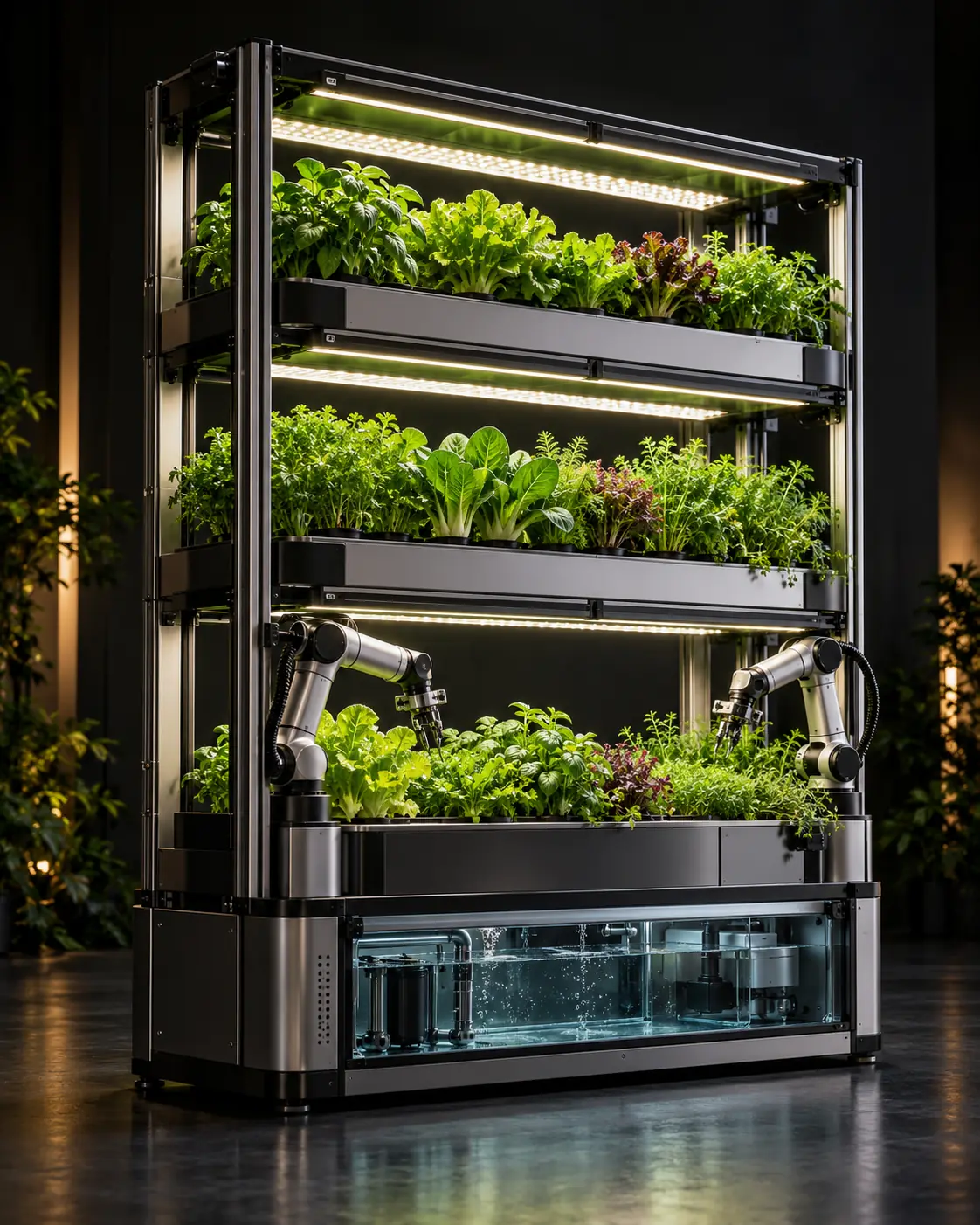
Hydroponics, lighting, nutrients and climate sensing.
Cameras and plant monitoring create the perception layer.
Dual robotic manipulators perform validated plant tasks.
Water returns through a monitored closed loop.
Experimental modules measure reclaimable resources.
Real prototype footage will be published here as validation progresses.
REAL FOOTAGE ONLYPrototype capability is separated from testing and research so progress stays understandable.
Hydroponic circulation · LED control · environmental sensing
Computer vision · dual-arm manipulation · PMFC module
Moisture-electric · hydrovoltaics · thermal-gradient recovery
STATUS UPDATED AS TESTING PROGRESSES
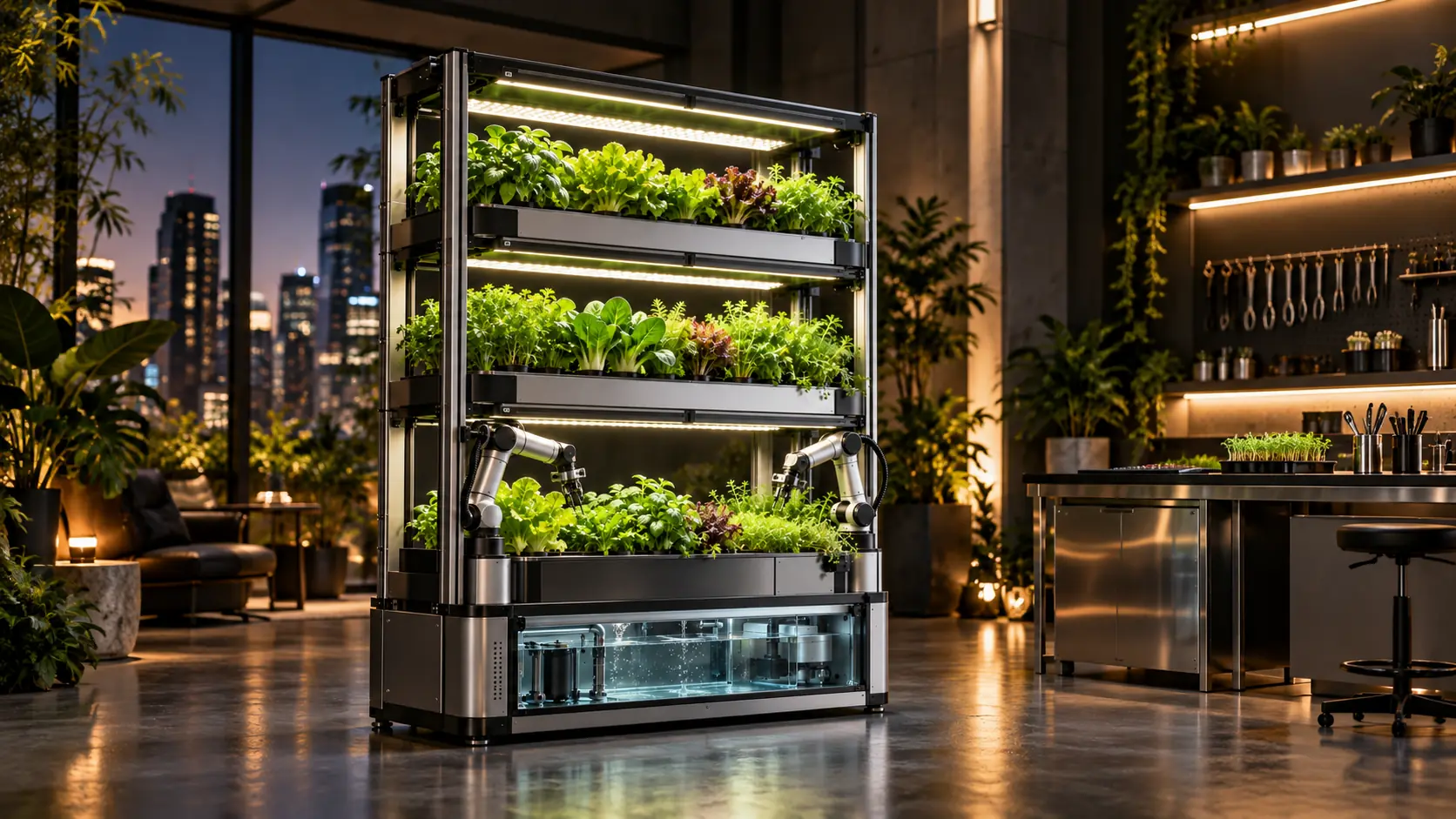
Water, light, climate, plant data and automation are managed as one system.
One arm can stabilize a plant while the second performs a tool operation.
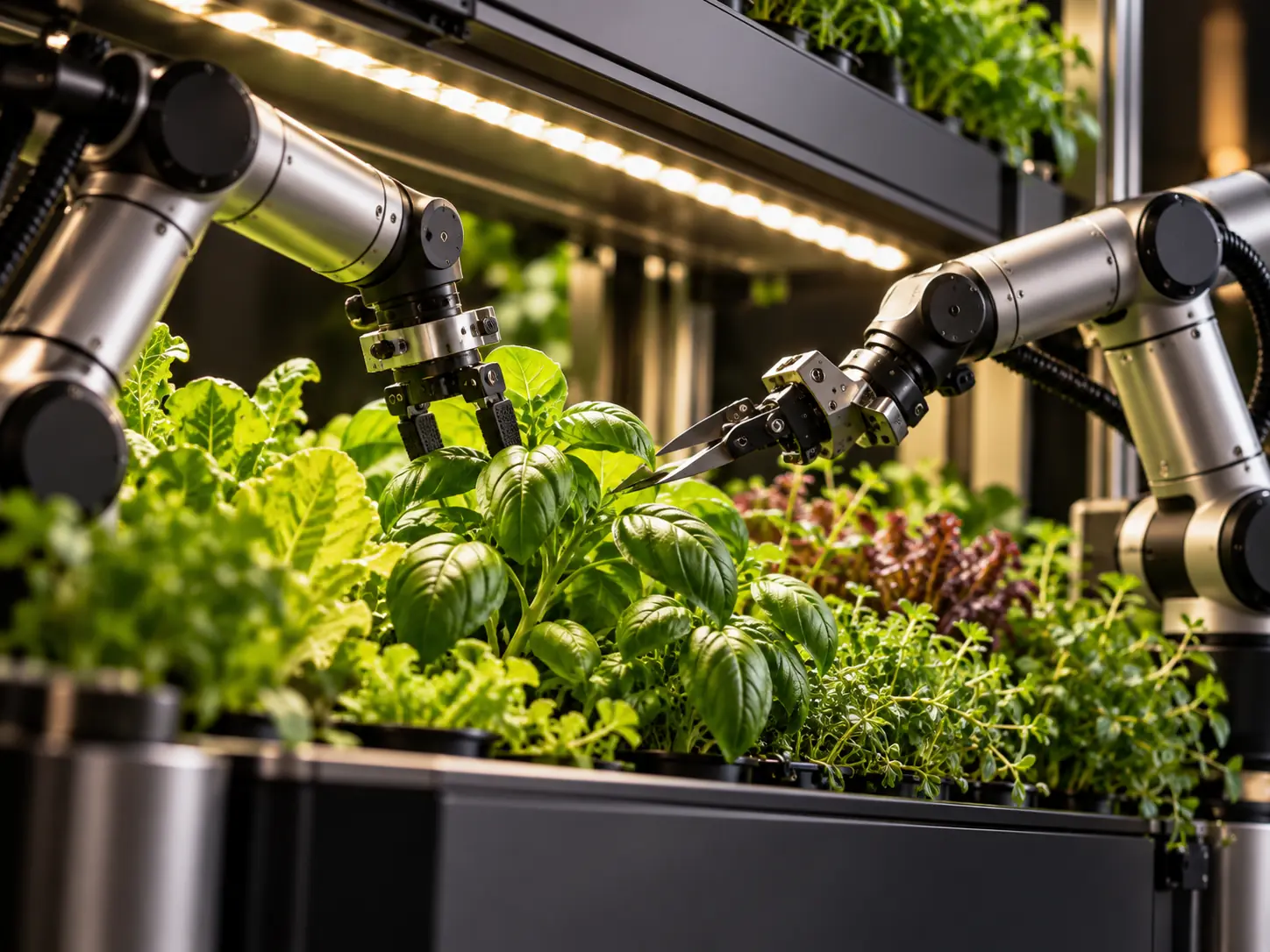
Every advanced feature depends on one basic requirement: reliable growing conditions.
Plant detection · growth tracking · condition analysis · harvest readiness · task planning
Motion limits · pump control · power limits · emergency stop · water safety
The loop is designed around circulation, monitoring and reuse rather than one-way consumption.
RESERVOIR · CIRCULATION · REPLACEMENT INTERVAL · RECOVERY RATE — IN VALIDATION
Primary power and experimental recovery remain separate by design.
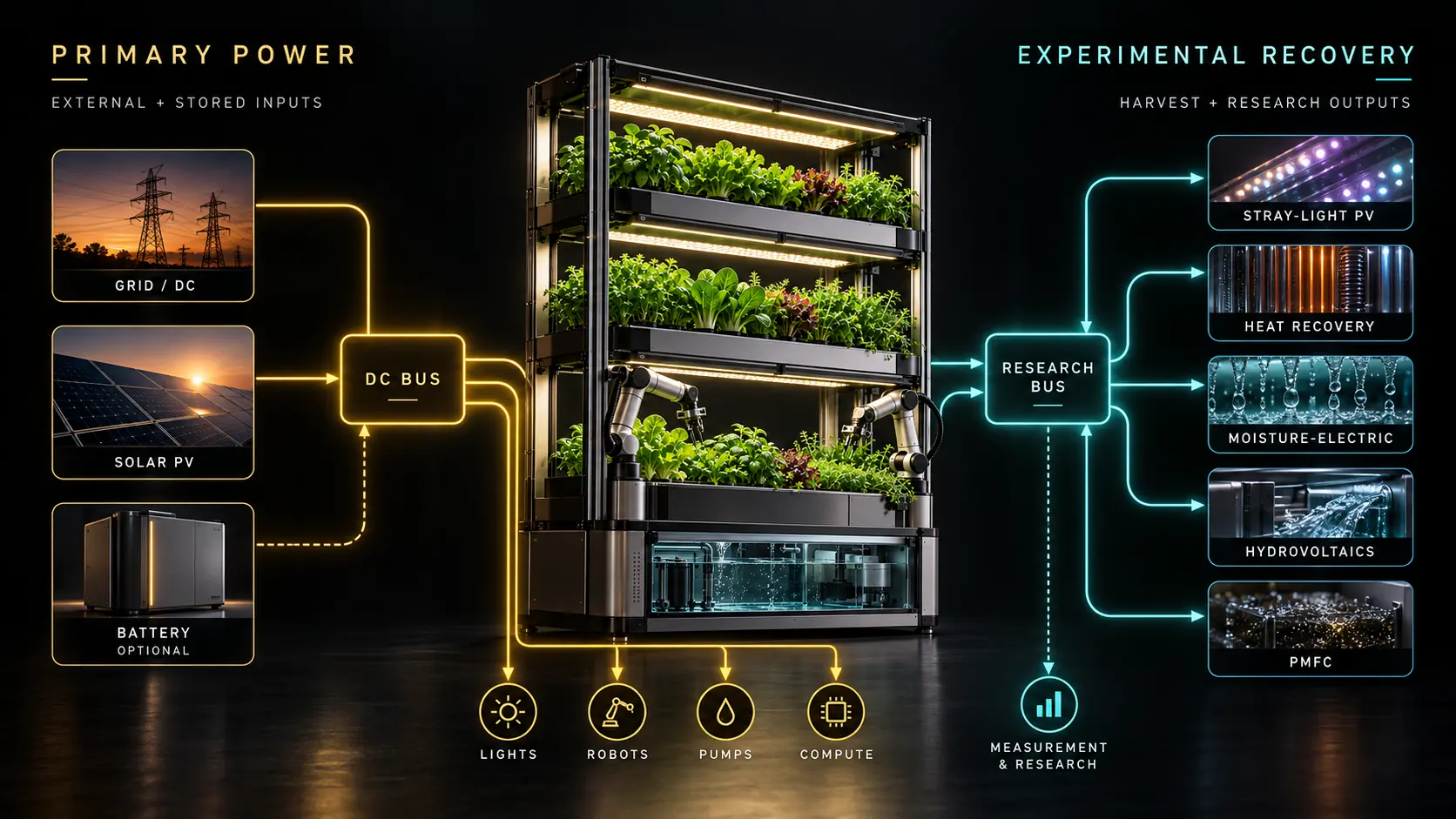
Grid / external DC
PV
Battery, if applicable
↓ DC bus → lights · robots · pumps · compute
Stray-light PV · heat recovery · moisture-electric generation · hydrovoltaics · PMFC · thermal/salinity-gradient research
Plant, environment, water, energy and robotics data share one telemetry layer.
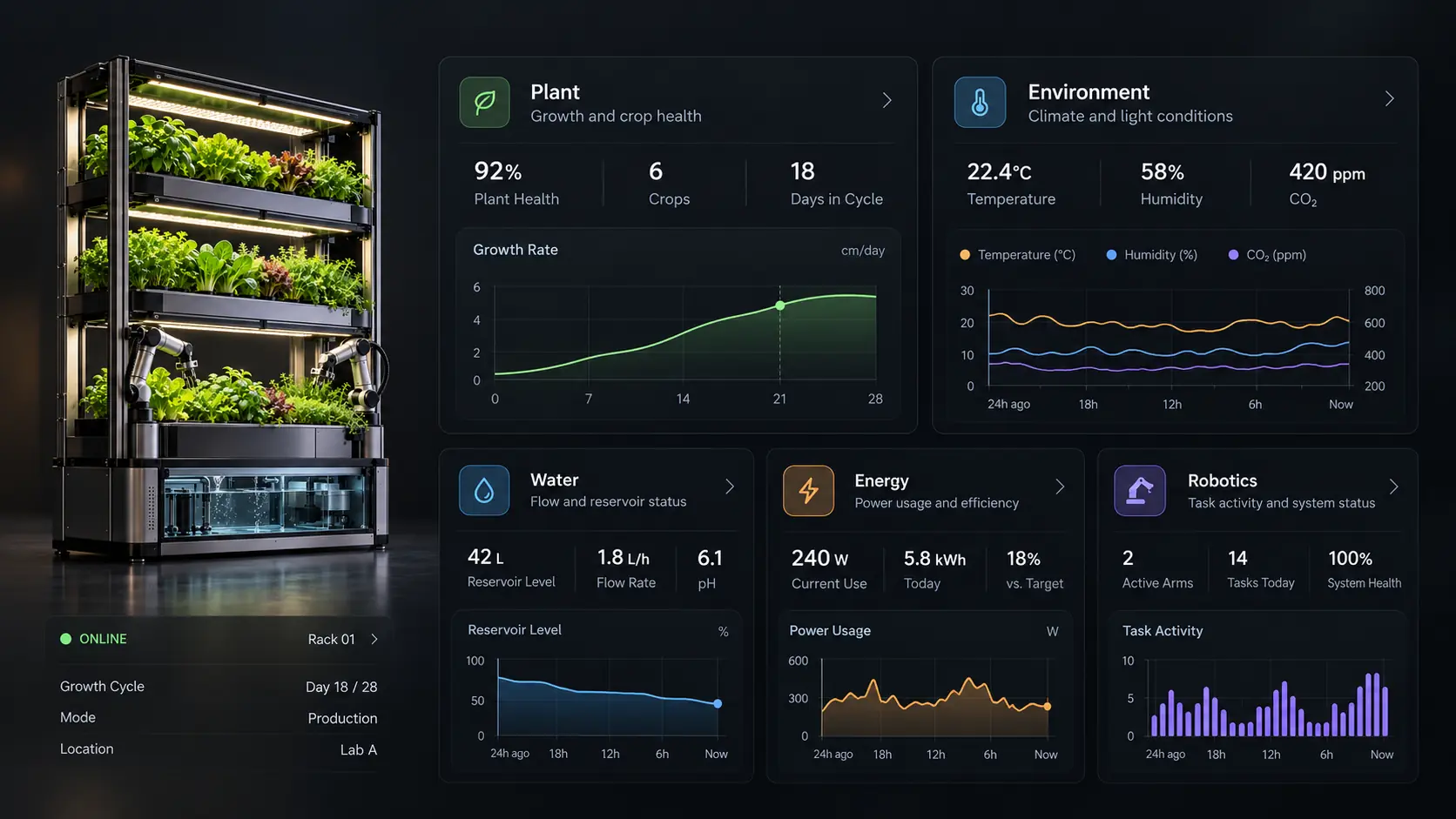
LIVE PROTOTYPE FEED AFTER INSTRUMENTATION VALIDATION
Growing · lighting · water · sensors · automation
Energy telemetry · validated recovery experiments
Dual arms · vision · tools
Advanced telemetry · experimental modules · API
CONFIGURATION LAYERS · FINAL COMMERCIAL PACKAGING FOLLOWS VALIDATION
Dimensions · weight · materials — In validation
Hydroponic method · crop capacity · nutrient management — In validation
LED architecture · reservoir · circulation · monitoring — In validation
Dual-arm platform · reach · payload · tooling — In validation
Compute platform · local control · connectivity — In validation
Primary bus · motion limits · leak monitoring · emergency control — In validation
Hydroponic circulation, LED control and environmental sensing.
Vision, robotic manipulation and selected recovery modules.
MEG, hydrovoltaics, thermal-gradient concepts and advanced harvesting.
PROTOTYPE → EVT → DVT → CERTIFICATION → PILOT → PRODUCTION
Plant manipulation · calibration · cleaning · biofouling · reliability · leaks · certification
Dedicated test rigs · replaceable modules · leak sensing · mechanical limits · deterministic safety control · telemetry · staged validation
No such claim is made. Primary power is separate from experimental energy recovery. Any future figures should be tied to a defined prototype and measurement period.
The planned AI layer handles perception and task planning. Safety-critical water, power and motion controls remain deterministic.
Robotic manipulation is currently under development and validation. Autonomous harvesting will be described as validated only after repeatable prototype testing.
No percentage is shown until a real measurement protocol and prototype dataset exist.
That is treated as a research question, not a marketing promise. Results should be published by module and test.
PROTOTYPE UPDATES · TEST RESULTS · LAUNCH NOTIFICATION